Top quote-to-cash solutions for SaaS companies
In a competitive B2B landscape, the ability to accelerate revenue from quote to cash isn’t just operational expedience, it’s a strategic advantage. Leading companies no longer tolerate fragmented revenue workflows that slow growth, introduce errors, and erode margins. Quote-to-cash (Q2C) software has matured into a core component of modern revenue operations, helping organisations automate and optimise their entire sell-to-revenue lifecycle. This guide highlights the most impact-oriented Q2C platforms in 2026, designed to support smarter pricing, faster closes, and improved cash conversion.
The real revenue challenge
Many businesses today string together multiple systems, CRM for pipeline management, spreadsheets for quotes, separate billing tools, and manual processes for payment follow-up. While this approach might work at small scale, it inevitably produces bottlenecks: inconsistent pricing, delayed approvals, billing errors, and cash left on the table. Quote-to-cash software solves this by unifying the entire chain of revenue activities, from initial offer to cash in bank, in one continuous workflow.
For revenue leaders, the key indicator isn’t just whether quotes are generated faster, but whether revenue is realized faster, with better pricing integrity and minimal manual effort. The right Q2C solution does more than automate tasks, it transforms revenue operations into a predictable engine for sustained business growth.
What SaaS companies need from quote-to-cash platform
For SaaS businesses, quoting is just the start. A modern Q2C platform must support:
- Complex pricing models (subscriptions, usage-based, hybrid bundles).
- Revenue automation from quote to cash collection.
- Integration with CRM and billing stacks.
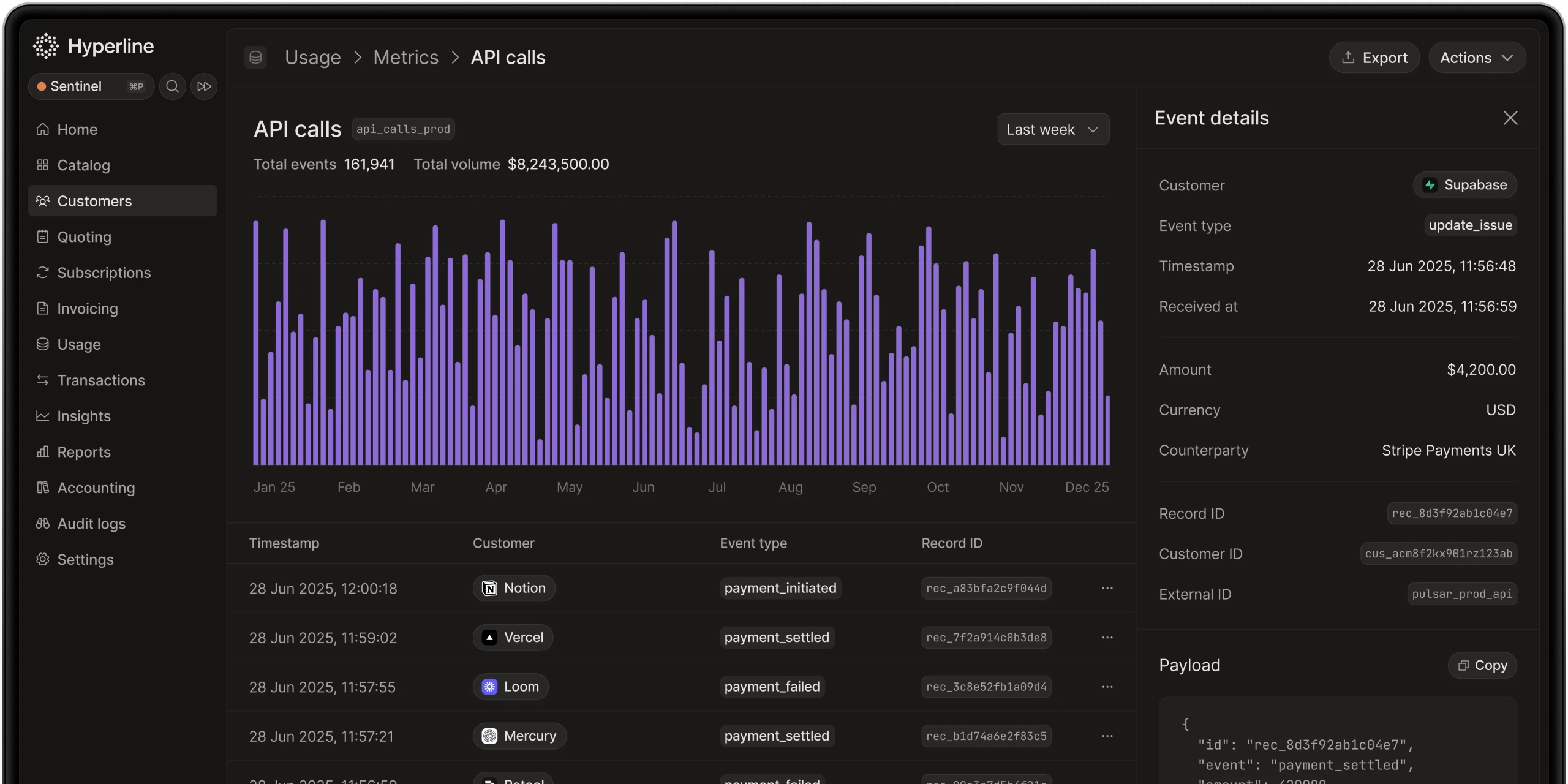
- Scalability and real-time analytics.
- Minimal manual handoffs across teams.
The right Q2C software doesn’t simply generate quotes, it orchestrates revenue operations end-to-end, giving SaaS leaders confidence that every deal flows cleanly to recognized revenue with minimal friction.
Top Quote-to-Cash Platforms for SaaS in 2026
Here’s a ranked look at the most impactful solutions for SaaS companies from all-in-one engines to specialized systems.
1. Hyperline Unified Quote-to-Cash for Modern SaaS Revenue
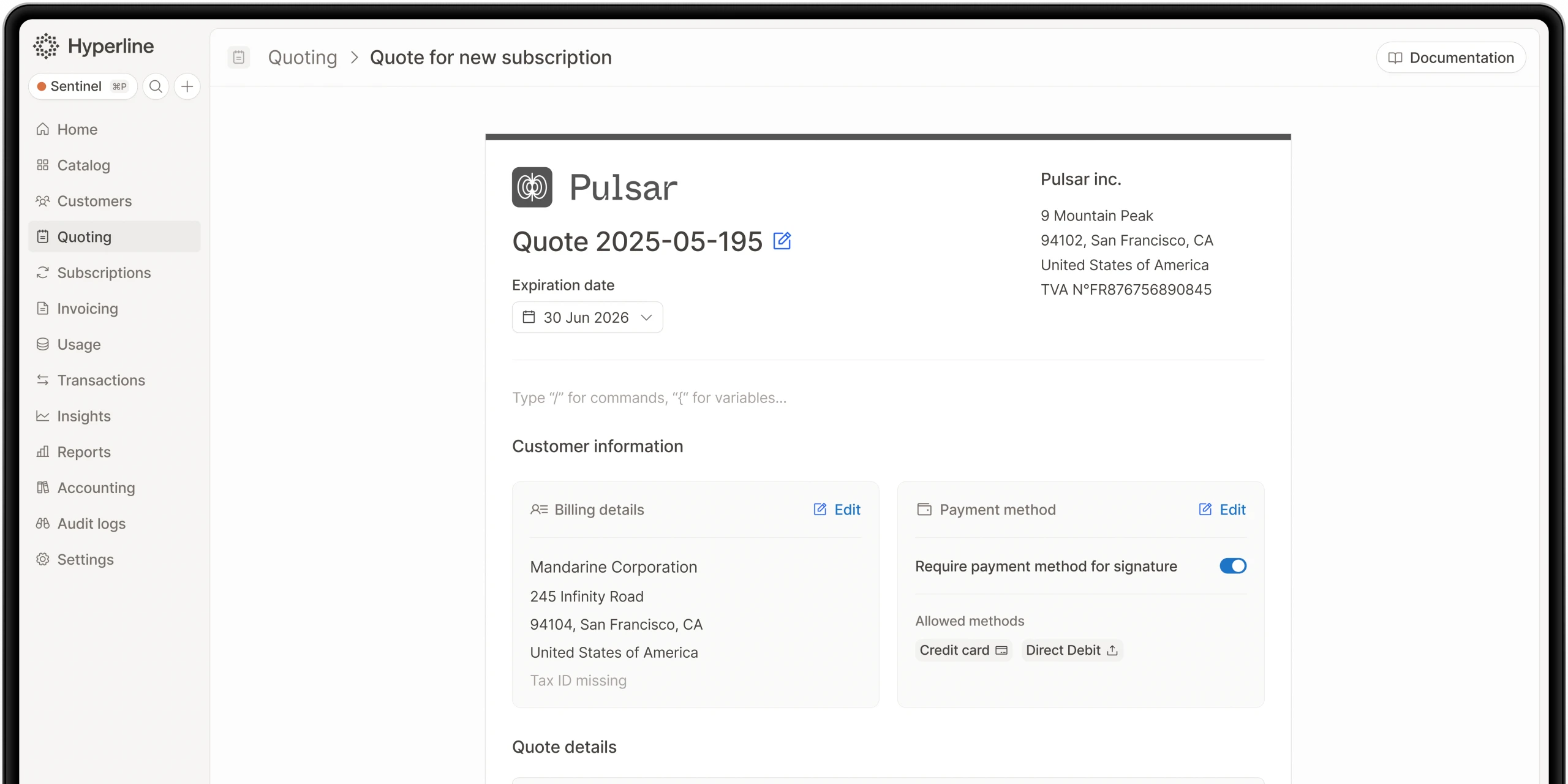
Hyperline is the best for fast-growing SaaS companies seeking a single source of truth for revenue operations. Indeed, the company unifies quote generation, billing, usage pricing, and payment collection into a single modern platform. With integrated billing and CPQ (Configure-Price-Quote), Hyperline eliminates the fragmentation that slows revenue teams and finance functions.
Key strengths:
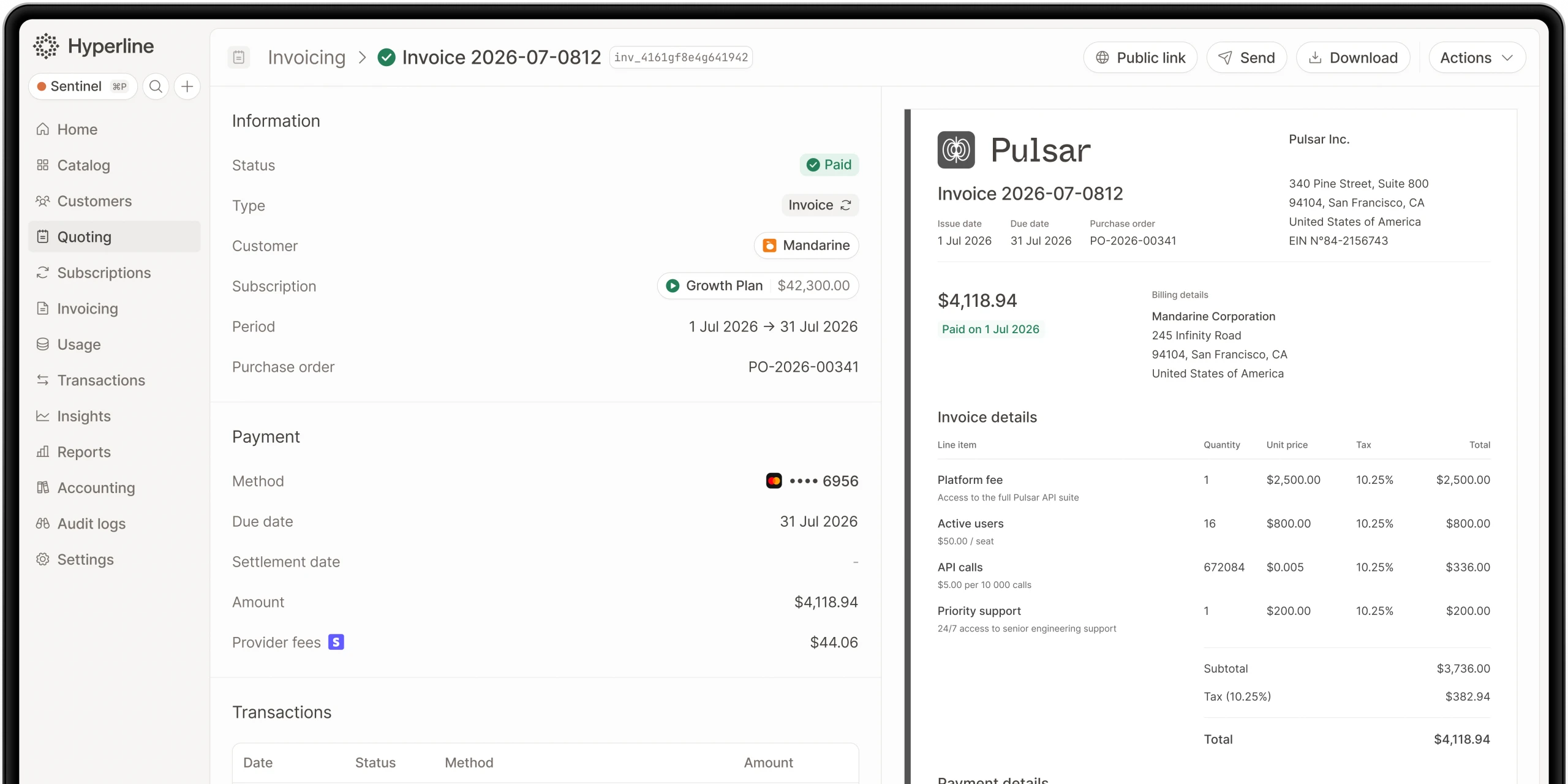
- End-to-end automation: Hyperline lets teams manage the full revenue cycle, from configuring prices and issuing quotes to automating invoicing and reconciling cash, without switching systems.
- Flexible pricing support: Whether you’re billing flat-fees, per seat, usage-based with prepaid credits, or tiered models, Hyperline’s pricing engine is built to scale with SaaS use cases.
- Native CPQ: Sales teams can generate accurate, branded proposals with built-in approvals and contract management.
- CRM and billing integration: Hyperline supports bi-directional sync with CRM and billing systems, reducing manual data transfer and enhancing operational alignment across teams.
Why SaaS teams choose it: Hyperline helps reduce manual billing work, shorten revenue cycle times, and improve visibility across sales and finance, enabling smarter decision-making and faster cash flow.
2. DealHub: Deep configurability for complex offers
Best for: SaaS companies with multi-product packages and layered approvals.
DealHub combines CPQ, contract lifecycle management, and subscription billing to help teams manage sophisticated pricing and deal structures. It’s especially strong for organisations that need tight control over approvals and visibility throughout the sales lifecycle.
Why It’s a good fit: For SaaS sellers with complex product catalogues or multi-tiered pricing strategies, DealHub streamlines the entire quoting process while preserving compliance and accuracy across revenue operations.
3. Maxio: Finance-first Q2C and revenue recognition
Best for: Mid-to-enterprise SaaS teams focused on financial reporting and compliance.
Born from the merger of SaaSOptics and Chargify, Maxio delivers a robust CPQ and subscription billing system with integrated revenue recognition and financial controls. It offers audit-ready workflows for finance-led SaaS organisations.
Why It’s a good fit: Maxio’s strength lies in synchronizing billing, reporting, and ASC 606/IFRS 15 compliance making it ideal for companies where financial clarity is paramount.
4. Cacheflow: Buyer-centric checkout experience
Best for: SaaS teams that want frictionless buying experiences.
Cacheflow focuses on an interactive, checkout-style quote experience that turns pricing and payment into a self-serve workflow. It’s tailored to SaaS organisations that benefit from reducing noise between quoting, approval, and customer commitment.
Why it’s a good fit: By blending quoting, e-signature, and payment into a single link, Cacheflow reduces drop-offs and speeds the path from quote to cash, especially for subscription-centric offerings.
5. Salesbricks: Easy-to-use Q2C for early-stage SaaS
Best for: Startups and lean SaaS teams.
Salesbricks delivers a lightweight Q2C platform that bundles quoting, billing, and revenue tracking with a focus on simplicity and fast onboarding. It’s particularly appealing for SaaS companies without dedicated revenue operations teams.
Why It’s a good fit: For founders and PLG (product-led growth) teams, Salesbricks simplifies Q2C without overwhelming teams with complex configuration.
How to choose the right Q2C solution for your SaaS business ?
When evaluating Q2C platforms, SaaS leaders should prioritize:
- End-to-end automation: Does the tool cover every revenue stage from quote to cash?
- Pricing model flexibility: Can it handle your existing and future monetization strategies?
- Systems integration: How well does it connect with CRM, accounting, and payment systems?
- Revenue visibility: Does it provide real-time insights across sales, finance, and operations?
A thoughtful selection process ensures your Q2C platform doesn’t just automate tasks, it becomes a strategic driver of revenue growth.
Conclusion
For SaaS companies focused on scaling revenue with operational precision, quote-to-cash software is a strategic necessity. While each platform on this list excels in different areas, the unifying theme is clear: SaaS businesses require tools that automate more than quotes, they need systems that deliver speed, accuracy, and cash-flow impact.
Among the leaders in 2026, Hyperline stands out as a holistic Q2C platform that aligns sales, finance, and revenue operations in one system, enabling SaaS companies to move faster, reduce manual effort, and unlock predictable revenue growth.
Where this fits in Hyperline
Frequently asked questions
LedgerUp is focused on the post-signature handoff: getting from a signed contract to a first invoice quickly. It does not include native CPQ, and its global e-invoicing and revenue recognition depth are limited compared to a full quote-to-cash platform, so teams that scale into hybrid pricing or larger, multi-country contracts typically re-evaluate.
It depends on pricing complexity. Simple, flat subscription pricing can run acceptably on separate best-of-breed tools connected by integrations. Once pricing includes usage-based or hybrid components, or deal sizes require approval workflows and e-signature, the reconciliation cost of stitched-together tools tends to outweigh the flexibility of picking each piece independently.
Usually not on its own. Oracle CPQ brings enterprise-grade catalog and pricing-rule capabilities for organizations operating at significant scale, but implementation timelines and total cost of ownership are heavy for a mid-market SaaS company evaluating it from scratch, unless the business is already committed to the Oracle CX or ERP ecosystem.
No. DealHub is a sales-side CPQ and contract lifecycle management tool, strong at quote building, redlining, and e-signature. Billing, usage metering, and revenue recognition are not native, so teams pair it with a separate billing platform and manage the handoff between the two.
Hyperline is the strongest fit for B2B SaaS companies with usage-based, tiered, or hybrid pricing that need CPQ, billing, and revenue recognition unified in one platform instead of three separate systems. For simple, seat-based pricing already running on Salesforce, or if the only need is post-signature contract handoff automation like LedgerUp provides, a different platform is a better starting point.
No. Conga CPQ is built for configuration depth on multi-line, rule-heavy quotes, historically tied closely to Salesforce. Billing and usage metering live outside the product, so it typically functions as the quoting layer in front of a separate billing system rather than a complete quote-to-cash platform on its own.
Salesforce Revenue Cloud's strength is CPQ configurability inside the Salesforce ecosystem. Usage-based and consumption billing is a comparatively newer layer than its quoting core, and the platform generally requires meaningful Salesforce admin and implementation investment to configure well for hybrid pricing.
Billing software converts an existing subscription or contract into invoices. Quote-to-cash software covers the full process before and after that: configuring a quote, getting it approved and signed, billing it correctly (including usage-based components), collecting payment, and recognizing revenue. A billing tool can be one part of a quote-to-cash stack; on its own, it isn't the whole thing.